Sustainable Ethics
One of the vital components in the foundation of Sustainable Ethics is a statement of human rights and the rights of the planet's environment and ecosystem. It may not seem intuitive to think that the environment is entitled to "rights" like humans are. But we must regard ourselves, the humans, to be children off and interlocked with our environment. We are wholly dependent on the well-being of the environment. And from a spiritual standpoint, we are coming to regard the Earth and the environment to be a conscious & living Entity in itself, and thus deserving of rights also.
Universal Declaration of Human Rights
The Universal Declaration of Human Rights as proclaimed and promoted by the United Nations is an excellent starting point for the definition of human rights that forms a vital cornerstone for a Sustainable Human Ethical system.

The American Bill of Rights
The American Bill of Rights adopted by the American Continental Congress is 160 years older than the United Nations Universal Declaration and is a good starting point for the definition of human rights.

The Conventions of a number of the States, having at the time of their adopting the Constitution, expressed a desire, in order to prevent misconstruction or abuse of its powers, that further declaratory and restrictive clauses should be added: And as extending the ground of public confidence in the Government, will best ensure the beneficent ends of its institution.
--- Preamble to the Bill of Rights
American Declaration of Independence
A good starting point for thinking about sustainable human ethics is the American Declaration of Independence. This is a remarkable and revolutionary document, far ahead of its time and its content and intent is still very timely today. The following exerpt is very relevant to forming a sustainable human ethical system today. The following sentences are quoted later in another section about the purpose of sustainable human government.

We hold these truths to be self-evident, that all men are created equal, that they are endowed by their Creator with certain unalienable Rights, that among these are Life, Liberty and the pursuit of Happiness.
In these modern times, we must understand that the term "men" mentioned above must be revised to read "human beings". "all human beings are created equal..."
Topic: Diversity, Equity & Inclusion
Despite the efforts of the Trump regime and the Project 2025 fundamentalists to crush and bury this topic, I and others will continue to pursue this topic, call it back to remembrance and talk about it. I refuse to let the MAGA crowd kill and bury this topic and even these words.
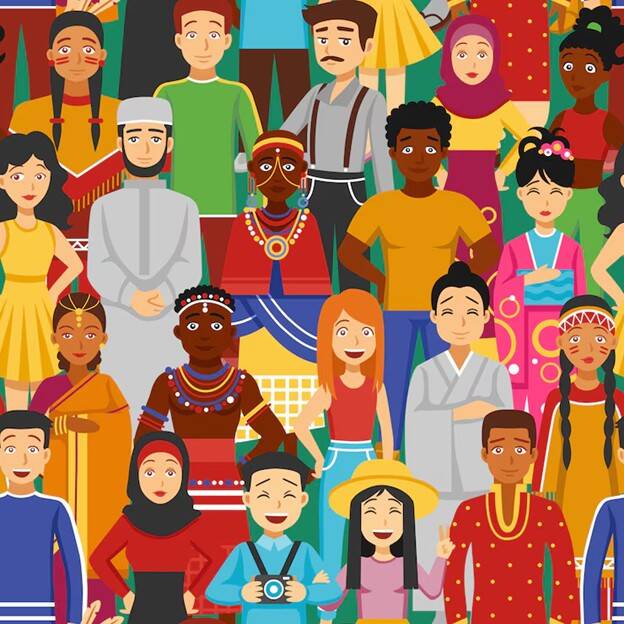
Diversity: The human species is a diverse species, insofar as they inhabit all of the diverse corners of the planet, from blazing hot and dry Saharan Africa, to the cold ice-covered Arctic regions around Greenland and Northern Canada. There are diverse races: white, black, Asian, Hispanic, many Indigenous races and everything in-between. Humans have many diverse cultures and religions, not to mention many historical cultures and religions that have not survived the passage of time. We have diverse languages, diverse religions or none at all, amazingly diverse manner of dress. All of these diverse humans are members of our Human Family. Along with many other people, I choose to regard diversity not as a threat, but as a strength and beauty of humanity.
Equity:
The Oxford Dictionary definition of equity: “the quality of being fair and just, especially in a way that takes account of and seeks to address existing inequalities.”
"general principles of equity and fairness"
Here are Gemini results on the key phrase "Equality vs. Equity"
Equality means providing the same resources or opportunities to everyone, regardless of their starting point, while equity recognizes individual differences and allocates specific resources needed to reach an equal outcome. Equity aims for fairness by adjusting for unique circumstances, whereas equality focuses on identical treatment.
The Annie E. Casey Foundation +3
Key Differences:
- Approach:Equality is a "one-size-fits-all" approach, while equity is tailored to specific needs.
- Goal:Equality ensures everyone has the same, while equity ensures everyone has what they need to succeed .
- Focus: Equality treats everyone the same, assuming they are starting in the same place. Equity acknowledges historical, systemic, or personal barriers.
The Annie E. Casey Foundation +3
Examples:
- Equality: Everyone in a school is given the same textbook, even if some students need braille or larger text.
- Equity: Students are provided with individualized learning tools (braille, audio, extra time) based on their specific needs to ensure they all understand the material.
The Bedford Group TRANSEARCH +4
In summary, equality provides equal access, but equity ensures that access is fair based on individual circumstances.
https://www .aecf.org/blog/equity-vs-equality
The word “equity” implies a process: recognition of inequality due to various causes, such as historical racism or endemic poverty or physical handicaps, and engaging (unequal) efforts to address specific needs in attempt to ensure an equal outcome. “Equity” is the process of creating “equality”. There is nothing inherently immoral about engaging in what on the surface appears to be unequal treatment to ensure an equal outcome.
Example: a 3-story apartment building:

Equality: A couple of sets of 3 story stairways complete with handrails that everybody must use.

Equity: The expenditure of a considerable sum of money to install a wheelchair accessible elevator, as well as installing expensive handicapped parking and wheelchair ramps up to the building. The apparent inequality here is the inordinate amount of money, space and effort expended to benefit a usually small minority of the residents.
Inclusion: “Nobody is left out.” Discrimination is the opposite of inclusion. In a just democratic society, everybody is entitled to equal participation. “Whites Only” lunch counters and rest rooms don’t fit. Denying gender affirming care to those who want and need it doesn’t fit. Forbidding transgender people the opportunity to serve in the armed forces doesn’t fit. Red-lining real estate districts doesn’t fit. Discrimination based on race, religion, ethnic background, gender identity or political party doesn’t fit.
